VMware Explore 2025 General Session VCF 9 and the Maturity of Private Cloud

Walking into the general session at VMware Explore 2025 in Las Vegas felt a bit like déjà vu — Broadcom, big stage, bold announcements. But unlike some years in the past where marketing slogans didn’t quite meet reality, this year the message was clear and technically compelling: VMware Cloud Foundation 9 (VCF 9) , a General Available product, is the platform that defines the future of private cloud.

From silos to a unified platform

The keynote hammered on a problem we all know too well: legacy infrastructure, developer frustration, operational silos, and the constant battle of balancing speed with compliance. With VCF 9, Broadcom’s pitch is that those problems aren’t just being patched, but solved at the architectural level. Compute, networking, storage, and security are integrated into a single software-defined stack. No more stitching together point solutions, no more losing weeks in lifecycle chaos. Hock Tan, the CEO and President of Broadcom made clear that there has been only one way to bring all those single great solutions (vSphere, NSX, vSAN, Aria, etc.) into a single product: Invest in engineering and coding.

The idea is simple, but powerful: private cloud done right, in one SKU, delivered consistently at any scale. That’s a huge step for IT teams who’ve been juggling fragmented systems while public cloud players tried to lure workloads away with promises of speed.

Customer stories matter

Of course, anyone can claim transformation. What made this session resonate were the customer stories. Barclays, a global enterprise, is leveraging VCF to accelerate developer velocity and support AI at scale. Meanwhile, Grenell Mutual  with a much smaller IT team used VCF to modernize legacy environments, reduce costs, and actually unify their teams. The contrast was intentional: VCF isn’t just for the Fortune 500. It scales down as gracefully as it scales up. Big teams create organizations challenges and therefore less outcome. VCF done the right way enables small teams to operate a complex cloud.

What’s new and why it matters

The session introduced plenty of new capabilities, and here are the highlights that stood out for me

VMwareExplore-GS-Annoucement
  • Developer velocity: VCF now runs containers and VMs side by side with native Kubernetes lifecycle management. Developers get self-service, policy as code, GitOps pipelines — and IT still keeps governance intact.
  • Private AI services: Broadcom bundled AI directly into the platform and included it from a license into the normal VCF Package. With a model gallery, retrieval-augmented generation (RAG) services, GPU allocation, and agent builders, you can now run AI on-prem with full control and data sovereignty.
  • Cyber resilience: Continuous compliance enforcement, automated ransomware recovery, confidential computing, and runtime security are built in. Security is no longer bolted on,it’s part of the DNA.
  • Automation and operations: Live patching without downtime, global deduplication, simpler network creation, and central diagnostics all point toward one thing: IT teams spending less time keeping the lights on and more time innovating.
  • Ecosystem partnerships: Canonical Ubuntu hardened containers, Nvidia GPUs, Intel and AMD accelerators — Broadcom isn’t trying to do this alone. The ecosystem support means customers aren’t locked into one hardware story.

My reflection

The message was unmistakable: public cloud is no longer the only way to get agility. With VCF 9, private cloud can deliver the same, if not better, in terms of speed, flexibility, and cost predictability. And importantly, it does so on your own terms, under your control, within your compliance boundaries.

For years, private cloud always felt like it was “almost there.” Too rigid, too siloed, too complex to operate at scale. Watching the VCF 9 announcements, I had the sense that Broadcom has finally closed those gaps. If deployed as a full stack, this isn’t just about infrastructure anymore. it’s about enabling IT to deliver modern cloud services inside their own data center at cloud speed.

Embracing And honoring the #vCommunity & #vExpert key players was one of my hightlights as well. The product and the whole ecosystem benefit so much from the valuable community behind.

The call to action

The general session ended with a clear challenge: IT professionals need to embrace the modern private cloud and position themselves as the architects of this next era. Broadcom is betting big on VCF 9, private AI, and continuous innovation in cyber resilience and based on what I saw in Vegas it’s time to take your environment to the next level. If that is still challenging you, reach out for me…I can help on all topics VCF :)

#VMwareExplore in Las Vegas -> Let’s learn how to play Poker and Join the event

#VMwareExplore in Las Vegas -> Let’s learn how to play Poker and Join the event

As you might know we are organizing a Poker event on Monday in Las Vegas. If you have no clue how Poker works, just watch the following clip.

If you have no idea what happened?! -> Check out the following play rules.

We play in 5 phases.

  1. The Deal – Everyone gets two private cards (your “hole cards”). These are just for you.
  2. The Flop – Three community cards are placed face-up in the middle. Everyone can use them, in combination with their own two cards, to make the best 5-card hand.
  3. The Turn – A fourth community card is added. Betting continues.
  4. The River – The fifth and final community card hits the table. This is your last chance to bet, bluff, or fold.
  5. Showdown – If more than one player remains, you reveal your cards. Best 5-card hand wins.

Those are the best cards * Source Wikipedia https://en.wikipedia.org/wiki/List_of_poker_hands

The goal is simple: win the pot by having the best hand… or by convincing everyone else you do. In poker (and in negotiatiosn), confidence counts as much as the actual cards you’re holding. Since I always lose at Poker I guess thats the reason why at comdivision we have fixed prices & don’t negotiate :P

And if you still have no clue you could still join and enjoy the atmosphere. Just play it like I would…

You want to join the comdivision Poker event? Check it out here:

Vegas, VMware, and… a poker tournament? That’s exactly how we’re kicking off Monday evening at VMware Explore 2025. On Monday, 25 August, 8:00 PM, the comdivision crew is taking over the prestigious Poker Room at The Venetian Hotel for an evening of cards, competition, and conversations you won’t want to miss. Whether you’re a Texas Hold’em veteran or you’ve only played on the odd poker night with friends, this is the perfect setting to relax, connect, and maybe pick up a few bluffing skills — could come in handy during your next subscription renewal negotiation.

The setup is simple: comdivision covers the event fees, you just bring yourself. Everyone starts with the same stack of 10,000 chips (no cash value), so it’s about skill, luck, and maybe a well-timed poker face. At the end of the night, the top three chip leaders will walk away with special prizes:

  • 1st: Seat at the comdivision Architecture Think Tank + exclusive branded prize
  • 2nd: Seat at a comdivision Challenge Days event + exclusive branded prize
  • 3rd: 20 cd:credits + exclusive branded prize

Even if you’re not eligible for prizes due to company or legal policies, you can still play — you just won’t be in the prize ranking. comdivision staff will be playing too, but don’t worry… we’re excluded from winning anything (except bragging rights).

Seats are limited, the stakes are fun, and the conversations at the table might be as valuable as the cards in your hand. See you Monday night — and remember, in poker and in IT architecture, sometimes you win by not showing all your cards.

Check it out here: https://go.comdivision.com/en/comdivision-poker-vegas2025

#VMwareExplore 2025 – @lenzker ‘s breakout sessions recommendations

I think I already told you that I am back in Vegas :) & I want to get back to the roots of technical awesomeness. Therefore the breakout sessions are the place to be :)

Let’s have a look why I took the full pass and which sessions I am going to visit. The last years put me a lot into organizational & business development topics – But this year my heart cries for some technical deetails. VCF 9 is the perfect opportunity.

A Hardware Smörgåsbord: Practical Tips and Tricks for Server Deployments [CLOT1774LV]


This title had me at Smörgåsbord [Say it 3 times and a VMware VCF accountant will appear]. This session dives into the practical aspects of hardware design that have a real impact on virtual infrastructure performance and reliability. From BIOS tweaks to server size choices and GPU planning, this is the kind of content you only get from field experience.

Why I’m attending: Hardware sizing decisions are still underestimated in many designs. I have good knowledge & a great Excel template, but I want to gain some new practical do’s and don’ts to make better long-term decisions in customer environments.

Design and Architect: Private Cloud Consumption with VMware Cloud Foundation Automation [CLOB1108LV]

This session is all about how to turn VCF into a real platform with automated provisioning, multitenancy, and consumption models that look and feel like cloud. It’s a mix of design patterns, deployment tips, and tenancy models using the new VCF Automation capabilities.

Why I’m attending: With VCF 9, the consumption layer is finally taking shape. I want to get a solid understanding of how to implement it in a way that supports platform teams and developers effectively.

Hardening and Securing VMware Cloud Foundation [CLOT1035LV]

Security begins at the base layer, and this session walks through how to harden VCF environments from the physical layer all the way up to workloads. Real-world attack examples make this session especially valuable for understanding where traditional setups fall short.


Why I’m attending: Since I do a lot of hardening engagements around VMware this is definelety the place to be :) I want to validate my current recommendations against Broadcom’s latest field insights and security architecture thinking.

Unlocking Your Data with Private AI – Retrieval Augmented Generation Deep Dive [INVB1070LV]


This session goes deep into how VMware envisions a production-grade Retrieval-Augmented Generation (RAG) setup using Private AI Services. It includes model serving with OpenAI-compatible APIs, GPU scaling, data indexing, and more.


Why I’m attending: Everyone is talking about GenAI, but few sessions go this deep into actual architecture. I want to understand the real building blocks behind deploying RAG on-prem in a secure and performant way.

Design and Architect: VMware Cloud Foundation for Edge Computing [CLOB1150LV]


This session looks at how to extend VCF to the edge, covering architecture, workload placement, and networking challenges in distributed environments. The goal is to apply VCF standards even in locations with limited space or compute.


Why I’m attending: Edge is becoming a serious topic, and VCF needs to adapt to be relevant there. I want to see how realistic these deployment patterns are and where they fit into hybrid cloud strategies. Let’s hope we get the Edge commercials also up and running (….. per VM subscription would be great :P)

Real-World Lessons in Rightsizing VMware Cloud Foundation for On-Premises AI Workloads [INVB1300LV]

Frank and Johan are bringing real-world lessons from designing VCF-based AI platforms, covering how to size infrastructure for LLMs and inference workloads. They’ll also showcase a sizing tool and discuss how to balance MLOps pipelines and platform cost. Whenever there was a VMware Explore the sessions of Johan and Frank have been the best -> The bar is high, but I am sure it will be hit!


Why I’m attending: This is probably one of the most hands-on and architecture-driven AI sessions at Explore. I want to hear what works, what doesn’t, and how to translate that into real customer designs.

A Deep Dive into Memory Tiering with NVMe [CLOB1122LV]

This technical session explains how vSphere and VCF now support memory tiering using NVMe, including config steps and optimization strategies. It’s aimed at increasing performance and efficiency in memory-hungry environments.


Why I’m attending: Memory tiering is one of those features that sounds great but needs careful consideration. I want to make sure HOW MUCH many I can safe without slowing down performance :)

Building Secure Private AI Deep Dive [INVB1432LV]


This session shows how to secure AI workloads using VMware vDefend and Private AI with NVIDIA. Topics include segmentation, threat detection, policy automation, and infrastructure-level control over model execution.


Why I’m attending: Security is a must-have for AI infrastructure. I want to see how VMware is integrating isolation and control into the AI stack, especially for private cloud deployments.

@Lenzker is back in Las Vegas – VMware Explore 2025, let’s go

@Lenzker is back in Las Vegas – VMware Explore 2025, let’s go

I haven’t been to Las Vegas in quite a while. The last time I walked down the Strip, vSphere 8 wasn’t even announced, Broadcom had yet to finalize any big acquisition, and VMware Explore was still called VMworld (and there was an event like #vSoccer & #vDodgeball that demonstrated my lack of fitness).

So I went down the registration road & here we are

I’m back.
Flight booked – ✅.
Explore pass – ✅.
Hotel sorted – ✅.

I’ve always loved this event. Not just for the technology, but for the atmosphere. The community vibe. The conversations you don’t find in slide decks. The random reunions with people you’ve only seen on Zoom over the past years. It’s the energy that makes Explore what it is. And if i look at my linekdIn Poll still 33% of my network will come to the US.

What’s new this year? Besides a whole new range of tech topics and announcements, VMware Explore 2025 introduces a more flexible event structure. For the first time, you can choose between three different types of passes depending on how deep you want to dive into the content—or how much you just want to connect with others.

The Full Event Pass gives you the classic, all-in experience: breakout sessions, Hands-on Labs, access to the general session, the party, the Hub, the exam voucher , and yes, the infamous backpack [if somebody wants it – drop me a message :)]. It’s what most of us are used to from past years—and still the best choice if you’re coming for both knowledge and community.

The Essentials Pass is a lighter version of that. You’ll still get to queue for sessions onsite, hear from leadership in the general session, and meet vendors and peers in the Hub. It’s a focused, flexible way to attend – especially if you want to avoid being overscheduled.

Then there’s the Meetings+ Pass, which actually had me thinking. It’s clearly geared toward business networking: access to the Meeting Center, the Hub, partner areas, and sponsored sessions. I’m a big fan of the face-to-face format, and this pass supports exactly that .So yes, I briefly considered going the Meetings+ route. If you know me, you know I enjoy meeting folks from across the ecosystem,partners, customers, tech friends. Building those connections is a huge part of what Explore is about for me.

But then I checked the session catalog.

And there it was: deep dives on VMware Cloud Foundation 9. New architecture models. Operations and automation changes. A real shift in how we approach private cloud.

My technical heart kicked in.
I’ve always been hands-on. I want to get my information straight from the engineers and field experts who built it. I want to sit in the front row and ask the awkward architecture questions. I want to come home with practical insights I can use in customer projects the next day.

So yes I went for the Full Event Pass.

Not just for the VCF content (though that was the tipping point), but because I still enjoy getting certified on-site, wandering through the Hands-on Labs, soaking in unexpected product updates, and of course: joining the party. Let’s not kid ourselves—Explore without the party just isn’t the same.

So here we are. I’m heading back to Vegas.

I’ll post my session list in a follow-up. There’s a good mix of technical VCF sessions, architecture content, and a few that dive into where the whole Broadcom + VMware story is headed from a partner perspective.

If you’re attending, let’s grab a drink. Or coffee. Or food. Or meet in a breakout. Or just say hi while crossing The Hub. You know how it is—random encounters often lead to the best ideas.

Btw. we are also organizing a Poker event – And if you want to see why I am one of worst Poker players in the world…. join us :)
https://go.comdivision.com/en/comdivision-poker-vegas2025

Looking forward to connecting, learning, sharing and yes, maybe dancing a bit too :D.

Let’s make this one count.
See you in Vegas.

Finally Released – VCF 9 and the Comeback of Private Cloud

Finally Released – VCF 9 and the Comeback of Private Cloud

The empire strikes back – My bad – the Private Cloud is back. For years, we’ve been building private clouds in the image of VMware Cloud Foundation: standardized, software-defined, and (ideally) automated. But anyone who’s run more than a single environment knows the limits—one SDDC Manager per instance, NSX pain points, no clean multi-instance control, and rigid storage design for the management domain.

With VCF 9.0, things are shifting. And it’s not just a product version bump—it’s a conceptual realignment.

Let’s walk through what’s new, what’s important, and why this might finally make VCF a serious candidate for scaled-out, AI-ready, and ops-friendly private clouds.

Being part of the Broadcom Knight program is both an honor and a responsibility. It’s a recognition of individuals who have demonstrated strength in both the technical and sales aspects of VMware’s evolving portfolio—something I’ve had the chance to prove in many projects over the years.

As a Knight, I’ve had the unique opportunity to gain early access to VMware Cloud Foundation 9.0, including deep technical sessions and direct interactions with the engineering and product teams. This gave me valuable insight into the architectural shifts, the rationale behind certain design decisions, and the operational vision that’s now embedded into the product.

Many of the concepts outlined in this blog—like the fleet-based model, automation layer, and updated storage flexibility—are things I’ve seen evolve firsthand during the pre-GA phase. It’s been a great experience to learn, challenge, and contribute feedback along the way.

Modular by Design: From Monolith to Fleet

One of the most fundamental changes: VCF 9.0 introduces a new modular architecture for large-scale deployments. Instead of each environment operating in isolation, VMware now defines three layers:

  • A VCF Private Cloud is the top-level construct, representing the overall environment.
  • Within that, you can run one or more VCF Fleets—each managed centrally.
  • Each fleet contains one or more VCF Instances, which is the traditional combination of management and workload domains.

This allows organizations to scale horizontally, while maintaining centralized governance, policy enforcement, lifecycle management, and automation.

Importantly, VCF Operations now takes over the central control role from the legacy SDDC Manager. It becomes the fleet-level management engine—covering what used to be local to each instance. Lifecycle, observability, compliance, and visibility are no longer trapped in the four walls of a single deployment.

VCF Automation: The Control Plane We’ve Been Waiting For

VCF Automation complements Operations by exposing a fleet-wide provisioning and consumption layer. Think blueprints, templates, service catalogs—and most importantly: an interface not just for infrastructure admins, but also for platform teams, developers, and anyone consuming infrastructure as a service.

It finally answers the question: “How do I consume my cloud like a cloud?” – The big question for our service provider customers and friend – Will it replace Cloud Director? …. Not yet … while multi-tenancy is backed in we will still stick with the Cloud Director communicated end of support – Oct 2027. But let’s face it – VCF Automation will be the future for all kind of self-service offerings – also for Service Providers

No More vSAN Mandate: Fibre Channel and NFS for the Management Domain

In previous VCF releases, the management domain was tightly coupled to vSAN. While vSAN ESA has its benefits, many environments—especially in the enterprise and service provider space some customers have existing investments made in SAN or NAS arrays for core infrastructure services.

With VCF 9.0, you can now use Fibre Channel or NFS as the principal storage for the management domain (No iSCSI). This change aligns VCF with reality: where storage decisions are driven by operational efficiency, not feature enforcement. Besides that keep in mind that vVols are still supported but deprecated.

This also makes VCF more accessible to customers who weren’t ready (or willing) to refactor their storage strategy just to adopt the platform.

Performance Matters: Memory Tiering, vSAN Global Deduplication, and GPU Mobility

Let’s talk performance.

VCF 9.0 introduces memory tiering using NVMe. This allows lower-cost memory to supplement DRAM, without degrading workload density or performance. Especially relevant as AI workloads and memory-hungry apps enter the private cloud. Selling 2TB memory by only having 1.5TB in hardware -> Sounds like a business for me :P

For storage, vSAN ESA now includes global deduplication, meaning dedup isn’t limited to a single disk group or host. The impact? Reduced footprint, more predictable scaling, and improved storage economics—especially in mixed workload clusters.

And for those investing in AI/ML infrastructure: GPU vMotion is now up to 6× faster. That’s the kind of improvement that actually enables maintenance without downtime in production training environments or dynamic resource optimization in inference clusters.

NSX: Finally Simpler, Finally Integrated

Let’s be honest—NSX has always been powerful, but in many cases, not easy.

With VCF 9.0, NSX finally feels like a first-class citizen of the cloud platform:

  • NSX lifecycle is aligned with vSphere and VCF upgrades
  • A single NSX Manager setup is now supported for smaller or edge deployments
  • VPC Model is simpliying how virtual networks can be consumed.
  • NSX is now integrated directly in vCenter, simplifying visibility and operations

Licensing & Costs

VCF Operations is now responsilbe for all the licensing and will connect directly to your broadcom account / subscription. No more keys – No more perptual licenses. This is where the industry has moved to.

From a pricing point nothing has changed. 350$ per physical Core list price includes the pure VCF feature set (with 1 TiB of vSAN per comitted core). Other features can be extended as add-ons like Microsegmentation/AVI Load Balanacer/Private AI. While many say that sounds expensive the TCO improvements in hardware investments can be reduced tremendously if you size it right.

And P.S. If I listen to the talks on the street about the price of competitors like Nutanix / Red Hat OpenShift – VCF is equally expensive by offering more value.

Conclusion: VCF is Growing Up

This release of VMware Cloud Foundation signals more than product maturity—it reflects architectural maturity.

With modular VCF Fleets, central control via VCF Operations and Automation, storage flexibility, and real performance improvements, we’re finally getting a foundation that scales with the real-world complexity of modern data centers.

If you’re running multiple VCF instances, planning a private AI infrastructure, or trying to regain cloud-like control without giving away sovereignty or margin to hyperscalers—VCF 9.0 might be the platform you’ve been waiting for.

And if you’re wondering how to align your current architecture with the new fleet model, or whether Fibre Channel makes sense for your management domain—reach out. Always happy to dive deep.

Ready for VCF 9?

Since IT infrastructure is critical besides all simplicity made with VCF 9 the correct architecture and methodology to bring VCF 9 into production is critical. If you want to get challenged if you, your hardware, your organization and processed are ready for VCF 9 – Drop me a massage. W

#VMwareExplore General Session and VCF 9.0: Redefining AI Deployment with Privacy and Performance

Private cloud management— You haven’t achieved it, right? Siloed systems, approval processes no one works on, and the ever-present specter of security issues. But at VMware Explore Barcelona, VMware pulled back the curtain on VMware Cloud Foundation (VCF) 9.0, a platform designed to make all those headaches a thing of the past.

One of the coolest things about VCF is the automation. (Hopefully) we can say goodbye to late nights tweaking settings and patching components manually—VCF handles capacity optimization, lifecycle management, and security patching on autopilot.

Security’s a big deal, and VCF has it baked right in. Live patching, automated updates, certificate management.

Keeping systems secure without taking them offline? Yes, please count me in, even though the difficulty of certain areas created some personal benefits for me ;)

VCF also throws some serious well needed cost-saving punches (which might compensate some of the subscription/license increases). Features like global deduplication in vSAN and memory-tiering help businesses get more bang for their buck by optimizing resource use.

For those just dipping their toes into VCF, VMware has your back with the Cloud Maturity Model, custom workshops, and free online training. It’s all about making the transition smooth and helping teams hit the ground running. Besides that, Broadcom has seen the value of the #vCommunity and makes sure that #VMUG members that are certified on #VCF can utilize non-commercial VCF licenses in the future for their homelab or learning Plattform.

VMware Cloud Foundation is more than just tech; it’s desired goal is to take away the complexity out of private cloud management, supercharge your security, and boost efficiency. I really hope they can stick to their vision.

If you’re ready to simplify your cloud strategy and unleash your team’s potential, VCF is where it’s at and no matter what VMware take you are using. Make sure your infrastructure and organization is ready for VCF. Let’s chat about how this game-changing platform can fit into your plans! If you want to know more, check out our #VCF readiness assessment here.

With VMware’s Private AI platform, deploying AI services is no longer a weeks-long ordeal—it’s done in minutes. This kind of rapid deployment is a dream come true for businesses looking to stay competitive in the AI space.

How about performance. VMware’s resource scheduler optimizes everything from GPUs and memory to network capacity and data, ensuring AI workloads run smoothly and efficiently. And here’s the kicker— according to VMware businesses can save up to 3x in costs compared to public AI services, without compromising on performance. Typically I never trust these kind of numbers, but if I cross check the prices for certain GPU backed infrastructure with the hyperscalers, I would go for it.

In fact, VMware’s advanced scheduling tech, honed over two decades, delivers performance on par with or even better than bare-metal infrastructure.

The platform’s flexibility is another highlight. It supports a wide range of hardware, OEMs, and tools, making it easy to integrate into existing systems. Plus, the new Model Store feature streamlines AI model management, from scanning and approval to production deployment, ensuring models are governed and secure.

For years I have become a fan of having your infrastructure running in a proper co-location (you want my recommended datacenter / co-location provider? Ping me for a honest opinion :P). With VCF 9.0 the story will become even better. let me know if you need more guidance.

#VMwareExplore: VMware Partner Keynote: Hock Tan’s Strategic Vision

My first session of this years #VMwareExplore was around the partner ecosystem. At the VMware Partner Keynote, Hock Tan laid out a comprehensive strategy that underscores the importance of VMware’s partner ecosystem in driving future success.

His insights into the evolving cloud landscape and VMware’s direction were both thought-provoking and inspiring. Here are the key points from his presentation:

  1. ESX: Strength with a Need for Simplicity ESX remains a cornerstone of VMware’s offering—robust and reliable. However, Hock acknowledged a pressing demand from customers: greater ease of use and more seamless integration across VMware’s suite of solutions. Simplifying the user experience is clearly a priority. #IMO ☑️
  2. Challenges in Public Cloud Hock highlighted a significant trend—organizations are beginning to retreat from public cloud environments, citing issues such as high costs, complexity, and compliance challenges. This shift underscores the growing appeal of private cloud solutions that offer more control and predictability. #IMO ☑️
  3. The Future is Private Cloud and AI The combination of private cloud infrastructure with AI capabilities is poised to redefine enterprise operations. This approach not only enhances data control but also empowers businesses to innovate more efficiently. #IMO I need to understand more about the specifics in the private AI offering. What I have seen as a bundle by Nvidia has been impressive. Not sure at this point in time what the value add of VCF Private AI is on top of existing Nvidia solutions
  4. Addressing Legacy System Silos Legacy systems often result in operational silos, making service delivery inefficient and troubleshooting difficult. VMware’s strategy includes breaking down these silos to streamline operations and improve overall efficiency. # IMO ☑️ – I am fighting this silos for years. Luckily we are slowly making progress.
  5. VMware Cloud Foundation (VCF) VCF was introduced as a key solution for simplifying data center operations and reducing costs. Its unified platform approach addresses the complexities of managing modern IT environments, offering a more cohesive and streamlined management experience. #IMO ☑️ A lot of improvements still must be made with VCF. I really hope VCF 9 will address to topics.

Hock outlined three strategic Commitments

  1. Fostering Partner Success Collaboration with distributors and resellers is a priority, as VMware seeks to ensure its partners are well-equipped to deploy and support services effectively. This focus on partnership underscores the company’s belief in mutual growth and success.
  2. Bringing Public Cloud Experience to Private Solutions VMware aims to deliver the flexibility and user-friendliness of public cloud environments through its private cloud solutions, addressing customer demands for a balanced approach.
  3. Empowering Partners Through Professional Services Hock emphasized a shift toward enabling partners to take on more professional services, enhancing their role in customer support and solution delivery.

Hock Tan’s keynote wasn’t just about VMware’s technology—it was a clear statement of intent about building a sustainable, collaborative future with its partners. His vision reinforces the critical role that partners will play in delivering innovative, customer-centric solutions. Not all Partner‘s are happy with the current state, but I see a lot of upcoming opportunities in case you are dedicated to #VMware.

If you’re exploring how to align your business with VMware’s strategic direction, now is the time to engage. Let’s connect and discuss how these insights can translate into actionable strategies for you. comdivision is ready to support you on your #VCF journey. Feel free to register for our #VCF readiness assessment.

#VMware Explore – Content Catalog and my top 5 picks

#VMware Explore – Content Catalog and my top 5 picks

Whoop Whoop! The VMware Explore 2024 Content Catalog is now live! You can explore a wide range of sessions, workshops, and expert-led discussions tailored to all things VMware and beyond. Start building your agenda today and find my top picks for this year :)

Mastering Infrastructure As Code With VMware VSphere And Terraform [VCFB1813BCN]

Join us for an in-depth, in-person seminar to learn the essential skills to build and manage your virtual infrastructure using VMware vSphere and Terraform. This hands-on moment is designed for IT professionals and developers who want to better understand infrastructure as code (IaC) and how to leverage these powerful tools to streamline and automate their virtual environments.

Why Do I want to join the session? Infrastructure as a code is such a great concept used quite often in modern clouds. vSphere is still lacking this nowadays in my customer base :) Its time for a change

Supercharge Your Workloads On VCF: Unleashing The Power Of DPUs [VCFB1208BCN]

Offloading central processing unit (CPU) tasks to a network interface card has been around for years, but data processing unit (DPU) cards take this to a completely new level. They free up CPU resources and reduce the number of hosts needed in your data center. DPUs are pivotal in accelerating and offloading computational workloads, but their potential to enhance security, particularly in intrusion prevention and detection, remains unexplored. How can we leverage these cutting-edge advancements to ensure the utmost protection for sensitive data and critical systems? We explore how DPUs strengthen security for VMware VCF Workloads and virtual desktop infrastructure (VDI) platforms, e.g., firewalling and testing real-world performance-simulating attacks. Gain valuable insights into best practices for configuring DPUs in your VMware Cloud Foundation environment.

Why Do I want to join the session? CPU Core Count is key due to the new licesining model, all features that increase performance and decrease CPU requirements must be Analyzed and understood as an architect :) Besides that Philipp and Marvin are great guys I want to work more with in the future :)

Unlocking Your Data With VMware And NVIDIA—RAG Deep Dive [VCFB1881BCN]

Organizations today have acquired massive data sets, but getting the right information at the right moment can be a challenge. Enter retrieval augmented generation (RAG), an approach that combines the intelligence of a large language model with current, relevant and accurate data from trusted sources. Join us for a 300-level look into a RAG pipeline-architected using Private AI Foundation with NVIDIA. We review the end-to-end workflow and how it maps to virtual infrastructure. Then we dive deeper into the components, including the LLM, NVIDIA Inference Microservices and Vector DB. We also review best practices—including sizing considerations and when to leverage fractional, full, or multiple graphics processing units (GPUs).

Why Do I want to join the session? Adjusting LLM to organisational needs is something many mid- to large size organisations ask for nowadays. Getting a better understanding how that can be achieved in a private infrastructure is something I want to understand by heart.

VMware Cloud Foundation Networking Performance—Deep Dive [VCFB1646BCN]

What performance should I expect from VMware Cloud Foundation networking stack? What is enhanced data path? How does a data processing unit help? How can I tune to maximize throughput? Is it possible to lower the latency? If these are some of the questions you would like answers to, join this session. We take a close look at application traffic profiles, real-life performance expectations, tuning, design considerations, hardware choice and more, to achieve optimal performance when leveraging VMware NSX.

Why Do I want to join the session? DPU Network performance real-life data :)

Breaking Chains: Transforming Attack Chain Analysis Into Defender Strategy [ESGB1142BCN]

In this session, we delve into the anatomy of recent cyber attacks to uncover the strategic lessons they offer. By analyzing various attack chains, we have identified key tactics, techniques and procedures (TTPs) attackers use. We translate these insights into practical defensive strategies, equipping cybersecurity professionals with the knowledge to bolster their defenses. Leave with actionable tips and a deeper understanding of how to protect your organization from attacks based on lessons from real-world data.

Why Do I want to join the session? Security is everywhere nowadays and everyone needs to get a better understanding of attack vectors, tactics, techniques, etc. I am really looking forward to it.

If you haven’t registiered yet -> Do it here :) If you want to join our secret public friends & family dinner in Barcelona on Monday… Drop me a note and I can give you guidance how you might join the proper club :)

#VMware Explore 2024: Join Us in Barcelona to get even more confident in the new #Broadcom Chapter

Due to some personal health incidents I was not able to join VMware Explore in Las Vegas -> But guess WHOOOO’s backkkk….

VMware Explore is back this year in Barcelona November 4th-7yh. This event marks the first European VMware Explore in the new VMware Broadcom era following the Broadcom acquisition. Attendees will gain insights into the evolving dynamics of VMware under Broadcom’s ownership, with a focus on VMware Cloud Foundation 9 and leveraging VMware for AI workloads.

For sure we all know William Lam’s playlist to bingewatch the session that have been presented at the US conference (https://github.com/lamw/vmware-explore-2024-session-urls/), but still there are several good reasons to attend Barcelona in Person.

Why Attend VMware Explore? Here Are 10 Compelling Reasons:

  1. Connect and Network: Forge meaningful connections with fellow data center enthusiasts. Whether you’re meeting new faces, sharing a meal, or engaging in business discussions, VMware Explore offers the perfect platform to build lasting relationships. Contribute to the community through blogs, tweets, or vBeers, and you’ll find that giving often leads to receiving valuable insights and support.
  2. Explore the Solutions Exchange: Dive into the core of the software-defined data center and multi-cloud ecosystem. The Solutions Exchange provides a unique opportunity to explore the latest innovations. Engage in in-depth discussions with booth representatives, and if needed, schedule one-on-one meetings to address your specific needs and ideas.
  3. Attend High-Quality Breakout Sessions: Choose from a wide range of breakout sessions designed to enhance your knowledge and skills. Your VMware Explore ticket grants access to all sessions, even post-event. Be sure to check out William Lam’s comprehensive collection of direct links to previous sessions for a preview of the valuable content you can expect.
  4. Engage with the Community at VMTN: Visit the VMTN booth and join discussions at the blogger table. Share your expertise or learn from others in a welcoming, community-focused environment. Submit your own session proposal or simply absorb the wealth of knowledge available. Unfortunately, vBrownbag will not be attending this year, but don’t miss out on joining the VMware #code program at the community booth.
  5. Meet the Experts: VMware Explore gathers a high concentration of industry experts. Arrange meetings to discuss specific challenges, design questions, or product insights. This is a unique opportunity to gain direct input from some of the best in the field.
  6. Pre-Event Networking: Connect with attendees beforehand on social media platforms like Twitter/X, TikTok, LinkedIn, and more. Discover what’s happening in Las Vegas, join or organize public meetings, and keep up with vendor and community-sponsored evening activities. Register early for various late-night events to secure your spot.
  7. Participate in the Hackathon: Join the hackathon for a collaborative and intellectually stimulating experience. Work with brilliant minds to tackle specific challenges. Even with limited time and resources, the hackathon is a fantastic way to engage with peers and enjoy a creative challenge.
  8. Meet the Community and Social Media Team: A highlight each year is the community booth, where you can interact with bloggers and active community members. Engage with VMware’s social media team, including Eric Nielsen and Corey Romero, who help make this community vibrant and welcoming.
  9. Return to Work with New Ideas: Gain fresh perspectives and innovative solutions to apply in your daily job. Engaging with thousands of smart, forward-thinking individuals will inspire new approaches to technologies, methodologies, and problem-solving.
  10. Discover Business and Job Opportunities: While this might not be the primary argument for your boss, VMware Explore offers the potential to uncover new business and job opportunities in the SDDC and cloud sectors. Understanding the market and environment at VMware Explore will help you identify and capitalize on these opportunities.

Ready to Transform Your Career?

Don’t miss out on this incredible opportunity to enhance your skills, network with industry leaders, and explore the latest in VMware technology. Convince your boss and register for VMware Explore 2024.

And if you are still reading this and meet me in person; let’s catch up… I will be at one of the pre-conference event starting on Sunday [and I hope to not end up in a club at the beach this year :)]

#VMware Explore 2024: Join Us in Las Vegas to get confident in the new #Broadcom Chapter

#VMware Explore 2024: Join Us in Las Vegas to get confident in the new #Broadcom Chapter

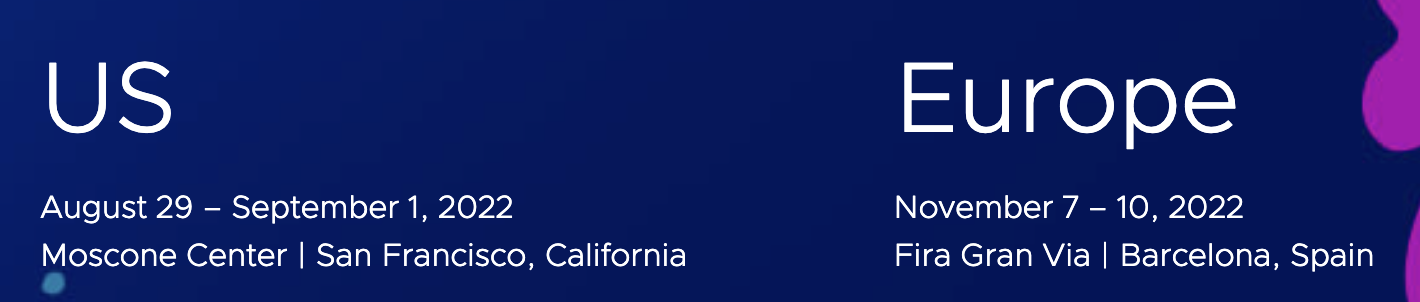
LAS VEGAS | THE VENETIAN | AUGUST 26 – 29, 2024

VMware Explore returns this year at The Venetian in Las Vegas. This event marks the first VMware Explore since the acquisition by Broadcom, and by now, everyone will understand how things work in the new VMware Broadcom era. The focus will be on VMware Cloud Foundation and utilizing VMware for AI workloads, providing valuable insights and updates for all attendees.

Why Attend VMware Explore? Here Are 10 Compelling Reasons:

  1. Connect and Network Forge meaningful connections with fellow datacenter enthusiasts. Whether you’re meeting new people, sharing a meal, or engaging in business discussions, VMware Explore is the perfect platform to build lasting relationships. Contribute to the community through blogs, tweets, or vBeers, and you’ll find that giving often leads to receiving valuable insights and support.
  2. Explore the Solutions Exchange Dive into the heart of the software-defined datacenter and multi-cloud ecosystem. The Solutions Exchange offers an unparalleled opportunity to engage with the latest innovations. Take the time to have in-depth discussions with booth representatives, and if needed, schedule one-on-one meetings to address your specific needs and ideas.
  3. Attend High-Quality Breakout Sessions Choose from a wide array of breakout sessions tailored to enhance your knowledge and skills. With your VMware Explore ticket, you’ll have access to all sessions, even after the event. Make sure to check out William Lam’s comprehensive collection of direct links to previous sessions for a preview of the valuable content you can expect.
  4. Engage with the Community at VMTN Visit the VMTN booth and participate in discussions at the blogger table. Share your expertise or learn from others in an inclusive, community-focused environment. Submit your own session proposal or simply absorb the wealth of knowledge available. Unfortunalty vBrownbag will not attending this year anymore, but don’t forget to join the VMware #code program at the community booth.
  5. Meet the Experts VMware Explore will host a high concentration of industry experts. Arrange meetings to discuss specific challenges, wishes, or design and product questions. Take advantage of this unique opportunity to gain insights directly from the best in the field.
  6. Pre-Event Networking Connect with attendees in advance on Twitter/X/TikTok/LinkedIn and other social media platforms. Discover what’s happening in Las Vegas, organize or join public meetings and events, and stay updated on vendor and community-sponsored evening activities. Don’t miss the various late-night events—register early to secure your spot.
  7. Participate in the Hackathon Join the hackathon for a collaborative and intellectually stimulating experience. Work alongside brilliant minds to tackle specific problems. Even with limited time and resources, the hackathon is a fantastic way to engage with peers and enjoy a creative challenge.
  8. Meet the Community and Social Media Team One of the highlights every year is the community booth, where you can interact with bloggers and active community members. Engage with VMware’s social media team Eric Nielsen’s team (including Corey Romero) and others who make this community vibrant and welcoming.
  9. Return to Work with New Ideas Gain fresh perspectives and innovative solutions that you can apply in your daily job. Engaging with thousands of smart, forward-thinking individuals will open your mind to new technologies, methodologies, and problem-solving approaches.
  10. Discover Business and Job Opportunities While this may not be the main argument for convincing your boss, the potential to uncover new business and job opportunities within the SDDC and cloud sectors is significant. Understanding the market and environment at VMware Explore will help you identify and seize these opportunities.

Ready to Transform Your Career?

Don’t miss out on this incredible opportunity to enhance your skills, network with industry leaders, and explore the latest in VMware technology. Convince your boss and register here for VMware Explore 2024 [don’t miss the early bird chance until the 11th June]. See you in Las Vegas!